An interactive SNOMED search that takes half a second per keystroke stops being interactive. Clinicians type ahead, they scan, they abandon fields that lag. The performance target for a SNOMED autocomplete is not "fast enough" — it is subhundred milliseconds at the ninety-fifth percentile. Hitting that target is a small set of design choices repeated well.
The site's SNOMED CT common-concepts browser is deliberately curated to keep interactive lookups fast. For the wider terminology backdrop, related FHIR write-ups collects supporting material.
Serve The Hot Cases From Memory
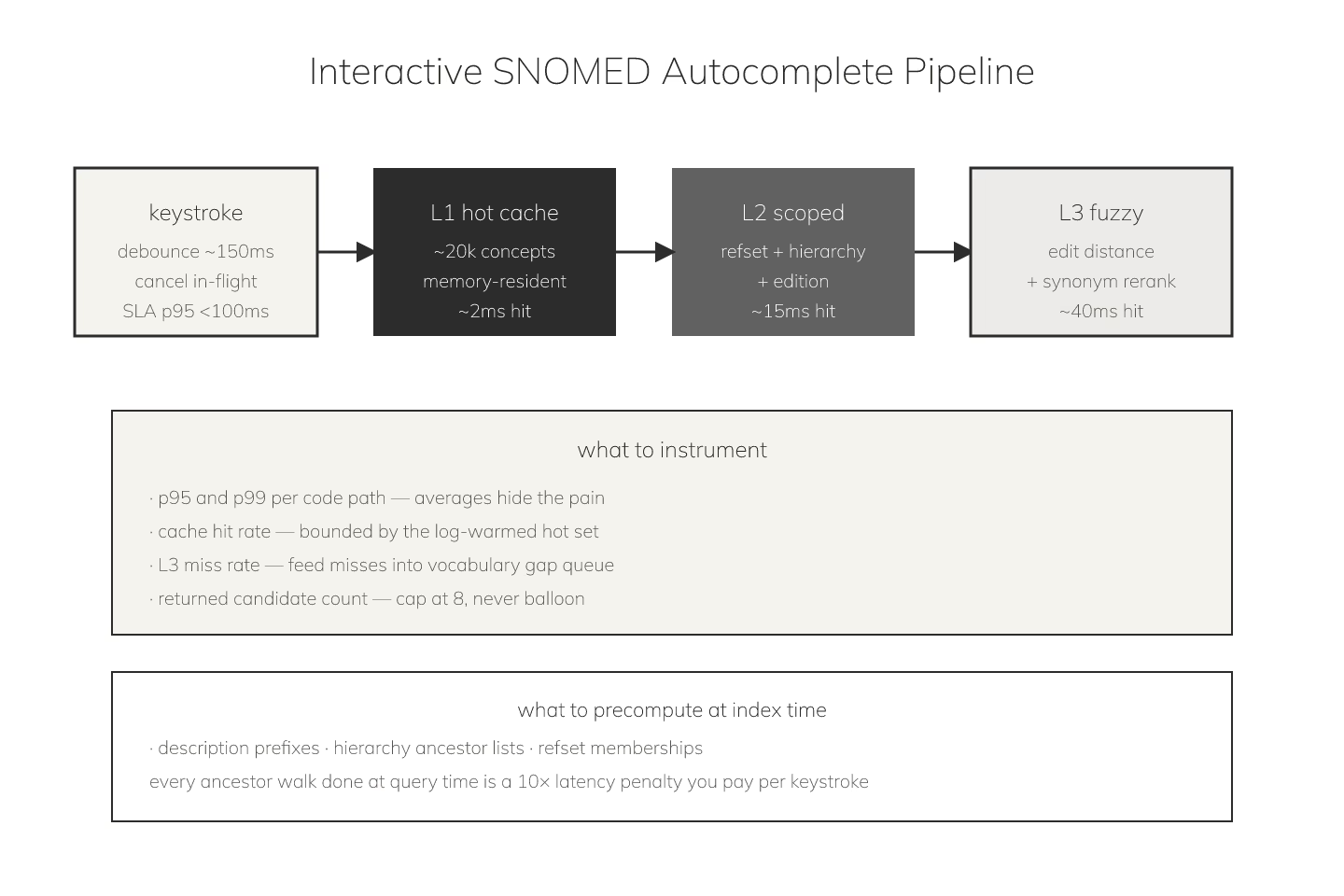
Every SNOMED autocomplete has a long-tail distribution. A small set of concepts covers the bulk of real queries. A memory-resident index keyed by lowercased description prefix, holding perhaps twenty thousand concepts, handles most keystrokes without touching a database. That single choice is worth more than any tokenizer optimization.
The hot cache is warmed from real query logs, not from a static top-N list. Static lists are wrong within a month; log-warmed caches follow actual behavior.
Scope The Search Space First
Autocomplete against the full SNOMED corpus is a losing bet on latency. Scope by:
- Reference set, when the caller's domain is known
- Top-level hierarchy, when the field expects a specific concept type
- Concept status, ignoring inactive concepts by default
- Language and edition, per caller context
Each filter cuts the search space by at least an order of magnitude, and they compose cleanly. For the reference-set half, reference sets: the SNOMED feature that shrinks your problem covers the mechanic.
Debounce, But Do Not Over-Debounce
Debouncing input by around one hundred fifty milliseconds is standard and cheap. Going higher makes the UI feel laggy, and going lower wastes queries on keystrokes the user is still typing. The right value is context-dependent, but the range is narrow.
Also cancel in-flight requests when a new keystroke arrives. A search that returns after the user has typed three more characters is worse than useless — it can overwrite a newer, correct result.
Return Small Result Sets, Not Complete Ones
An autocomplete does not need thirty candidates. Eight is a good ceiling. Rank inside the small set with description-hit score, hierarchy match, and description length as a weak precision signal, in that order. Larger result sets cost more to render and confuse the user more.
For teams that want to rank with hierarchy structure, concept relationships as a search-quality lever covers the ranking side.
Precompute What You Can
Description prefixes, hierarchy ancestor lists, and reference-set memberships are all precomputable. Doing that work at index time rather than query time is not clever — it is table stakes for interactive latency. If the search service builds ancestor lists on the fly, budget for a ten-times latency penalty on any hierarchy-aware query.
Instrument The Ninety-Fifth Percentile, Not The Average
Averages hide the queries that hurt. Instrument the ninety-fifth and ninety-ninth percentiles per code path — cache hit, cache miss with hierarchy filter, cache miss with fuzzy fallback. The distribution reveals which of your patterns is silently degrading. Averages tell you nothing.
Do Not Confuse Search With Lookup
Autocomplete for entry is a search problem. Resolving a stored concept to a display name is a lookup problem. The two share code more often than they should and get the wrong optimization applied to each other. Keep them on separate paths. For the search side, searching SNOMED CT when you only have a free-text symptom is the deep dive.
The Short Version
Interactive SNOMED search is a memory-cache problem, a scoping problem, and a ranking problem stacked in that order. Get each layer right and the ninety-fifth percentile stays under a hundred milliseconds. Skip any of them and it does not.
Sources
- SNOMED International canonical SNOMED CT search - SNOMED International canonical SNOMED CT search documentation covering ranking + description index