SNOMED CT is not a flat dictionary. Its relationships — the "is a" links, the attribute relationships, the qualifier links — are what turn a search index into something clinicians actually trust. Ignoring those relationships is the reason a lot of SNOMED searches feel dumb even when the underlying data is complete.
The site's SNOMED CT common-concepts browser surfaces the most common concepts. For the wider terminology context, the rest of the FHIR coverage collects related pieces.
The Two Relationship Types That Matter Most
- The "is a" relationship, which builds the hierarchy of parent and child concepts
- The attribute relationships, which describe things like finding site, causative agent, and severity
Anything else in the SNOMED relationship model is either less common in practice or already implied by these two. Get the "is a" walk right and the attribute joins right, and the vast majority of search-quality wins are available to you.
Broaden Via "Is A" Walk
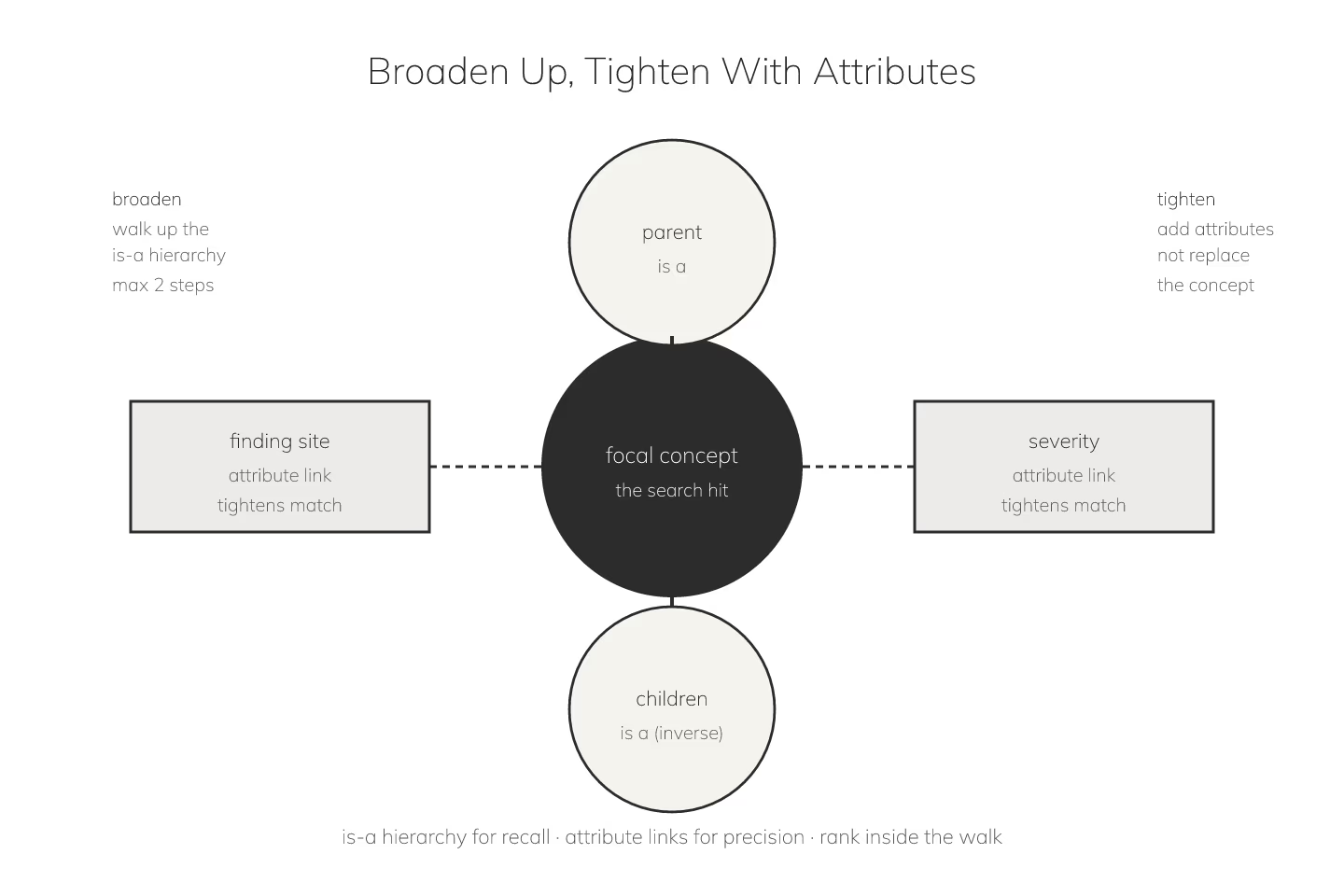
When a specific concept is right but too narrow for the user's intent, walk one or two steps up the "is a" hierarchy. A search for a specific fracture concept can broaden to the parent fracture-of-that-bone concept, then to the fracture-in-general concept. Each step widens the recall and lowers the precision, and the trick is knowing when to stop.
A pragmatic rule: never broaden more than two steps by default. Beyond that you are almost always losing more precision than the extra recall is worth.
Narrow Via Attribute Constraints
When the concept is close but not sharp, tighten with attributes rather than replace with a different concept. Adding an explicit finding site or severity turns a general concept into the one the user actually meant. Attribute constraints hit indices that are usually well maintained in a serious terminology stack, so the cost is small.
Do not overload attributes if there is a pre-coordinated child concept that already captures the specificity. That is the fast path to composed expressions that break your indexing.
Use Relationships To Rank, Not Just To Filter
Two matching concepts with the same description-hit score should not tie. The one with more attribute completeness for the caller's context wins. The one with more child concepts under it usually wins for a "broader" query and loses for a "narrower" query. Encoding those preferences into the ranker adds a few lines and moves the search quality more than any tokenizer tweak.
Detect Ambiguity Through Sibling Relationships
Two candidate concepts that share the same parent but differ in a critical attribute are exactly where clinical decisions get made or missed. Flag them for the caller. Do not silently pick one. For the receiver-side treatment of that flag, handling ambiguous SNOMED concepts in a downstream system walks through what to do with it.
Relationships Plus Reference Sets
Reference sets narrow the concept space; relationships add reach inside that narrowed space. The combination is what makes SNOMED search feel snappy and correct at the same time. Neither one alone gets you there. For the reference-set half, reference sets: the SNOMED feature that shrinks your problem is the entry point.
Where Relationships Come From
Relationships live in the SNOMED release itself, in the concept and description files, and every serious terminology server exposes them via the standard operations. If your stack rolls its own relationship table by hand, you are doing more work than the vocabulary asks of you. Use the release artefacts.
For the search-entry side of it, searching SNOMED CT when you only have a free-text symptom covers how to get into the graph in the first place.
Sources
- SNOMED International Editorial Guide canonical - SNOMED International Editorial Guide canonical documentation of concept model and relationships