A downstream system that receives SNOMED-coded data has a specific problem the sender does not. The sender knew what they meant. The receiver has a code and a hope. Ambiguity in SNOMED payloads is where the interpretation cost usually lands, and pretending it does not exist is where the trouble compounds.
The site's SNOMED CT common-concepts browser sticks to concepts that are hard to misinterpret. For related terminology framing, the FHIR primer hub has more background.
Where Ambiguity Comes From
- Concepts that are technically distinct but clinically overlap
- Post-coordinated expressions with attribute variants the receiver did not expect
- Concepts that changed meaning across SNOMED releases
- Concepts sent from an edition the receiver does not carry
- Concepts that map to two ICD-10 codes with context
Each has a different signature and a different fix. Treating them as one problem is where most receiver-side pipelines stall.
First: Detect The Ambiguity, Do Not Route Around It
The temptation on receipt is to pick a canonical concept and move on. That is the shortcut that hides the drift. Detection has to precede routing. A receiver that logs "ambiguous" for a small percentage of incoming concepts is doing its job; a receiver that silently commits to one interpretation is accumulating a data-quality problem it cannot see.
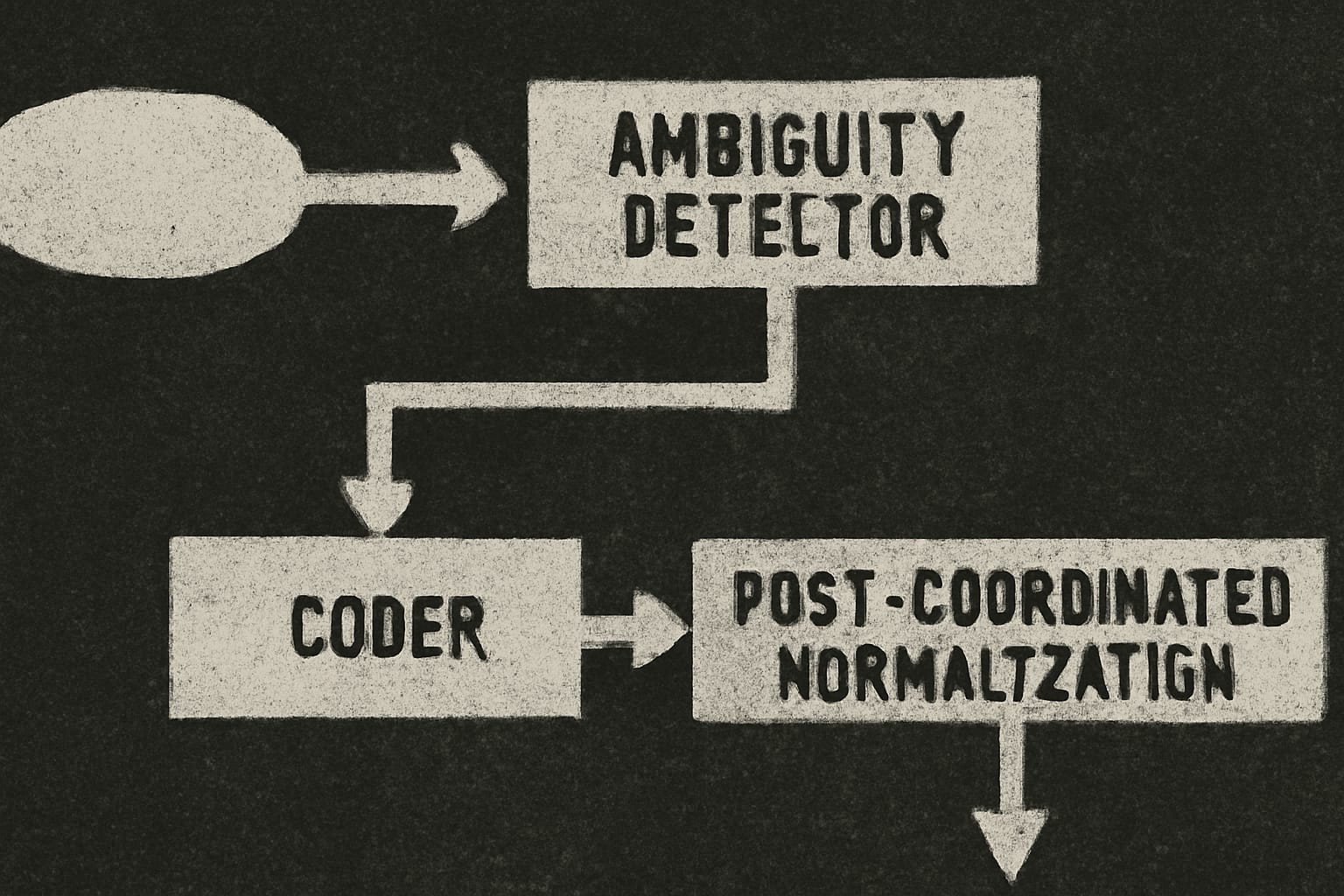
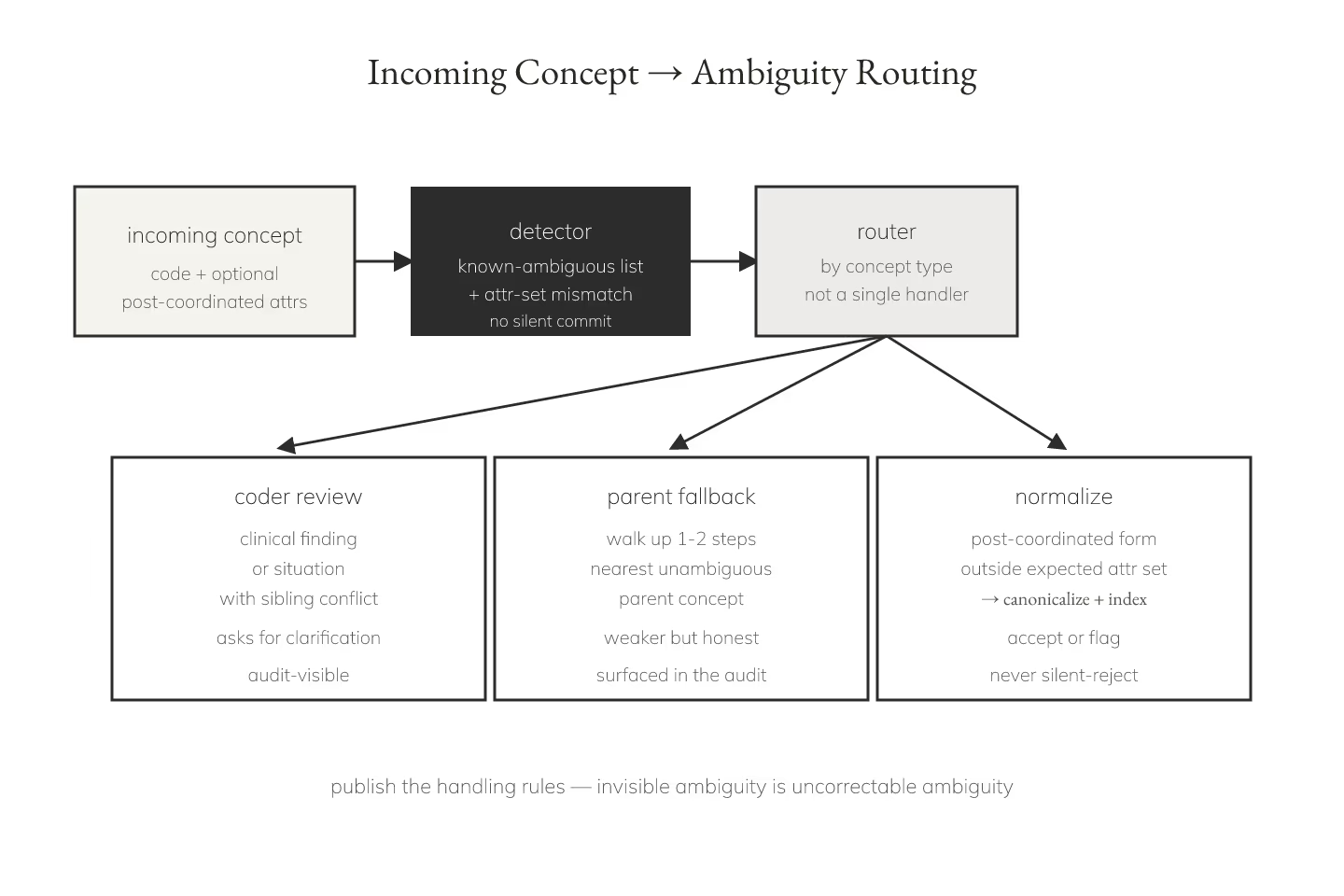
Detection is cheap. It is an equivalence check against a curated list of known ambiguous concepts, plus a check for post-coordinated forms that fall outside the expected attribute set. Both fit in a small table.
Route By Concept Type, Not By Guess
An ambiguous clinical finding routes to a coder or to a rule that asks for clarification. An ambiguous procedure routes to a different rule that checks against the scheduled encounter. An ambiguous situation with explicit context routes to a rule that reads the context first. The concept type carries most of the routing decision. Do not build a single ambiguity handler.
When To Fall Back To Related Concepts
When the exact concept is unclear, sibling and parent concepts are often unambiguous enough to make the downstream decision. Fall back to the nearest parent that resolves the ambiguity, log the fallback, and surface it in the audit. That is a strictly weaker signal than a specific concept, but it is a real signal — and better than a wrong strong signal. For the concept-graph mechanics, concept relationships as a search-quality lever covers the walk.
Post-Coordination Deserves A Dedicated Path
Post-coordinated expressions arriving at a receiver that only expects pre-coordinated concepts should not be silently rejected or silently converted. They should be normalized, indexed, and either accepted or flagged. The pattern for that is covered in post-coordinated SNOMED expressions without breaking indexing.
Cross-Vocabulary Ambiguity Is A Different Beast
A concept that behaves ambiguously specifically because it maps to two ICD-10 codes with context needs a different resolution path — usually a rule that reads the accompanying context resource on the record. Trying to fix that at the vocabulary layer is misplaced. For the underlying question of when each vocabulary belongs, SNOMED CT vs ICD-10: when each one is the right answer is the entry.
Publish The Handling Rules
Every downstream system should publish, internally, the list of concept types it handles ambiguously and how it handles them. That publication is what makes the sender-side conversation possible. Ambiguity that lives in the receiver's head is invisible to everyone else and eventually surprises everyone else.
The Short Version
Ambiguity in incoming SNOMED payloads is normal, detectable, and route-able. Detect first, route by concept type, fall back to parents when needed, and publish the handling rules. The receiver stays sharp, the sender learns what to send, and the audit trail stays honest.
Sources
- SNOMED International Editorial Guide canonical - SNOMED International Editorial Guide canonical documentation of concept identity + inactive concepts